Revision Rhinoplasty: Surgery
Norman Pastorek M.D.; Frank P. Fechner M.D.
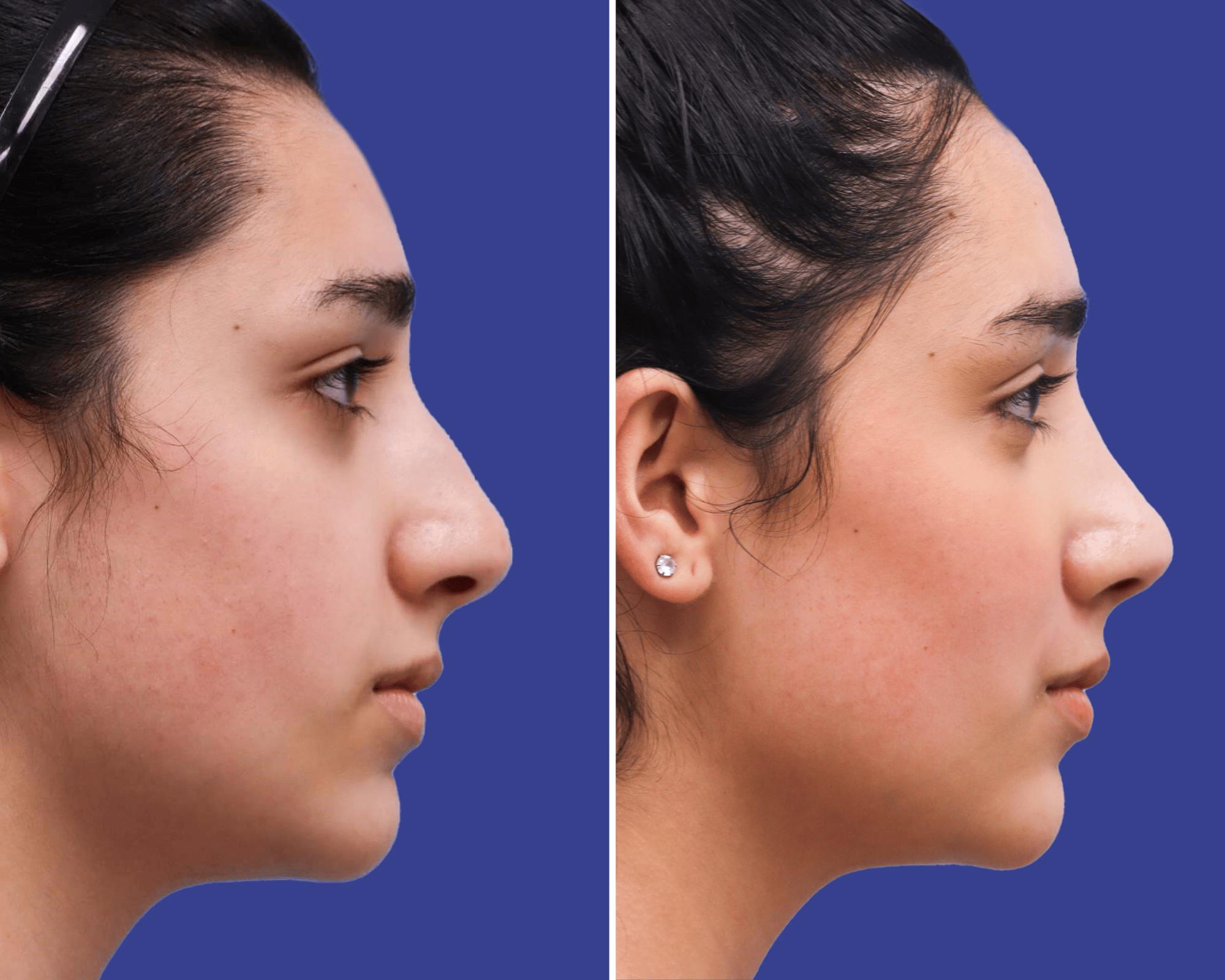
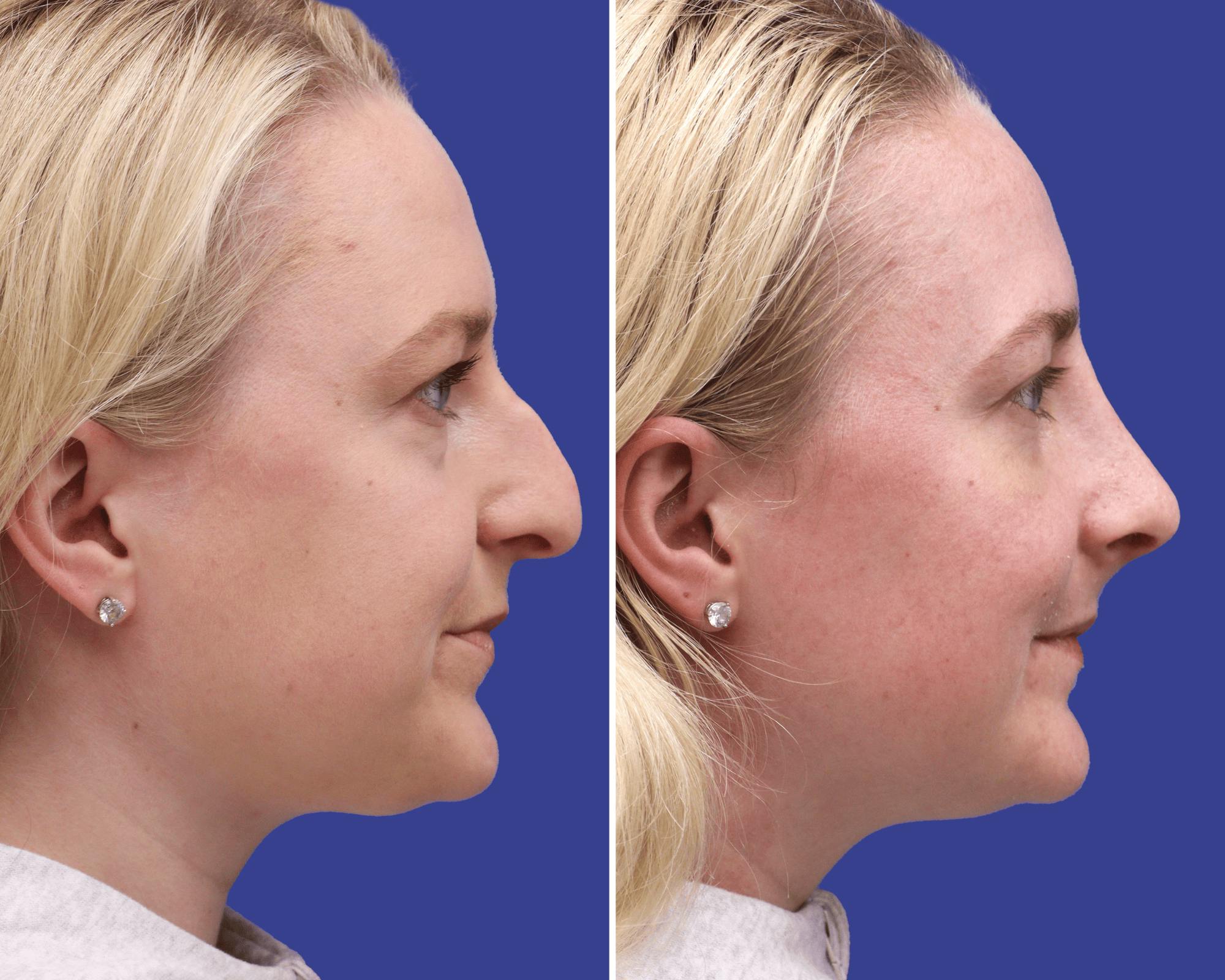
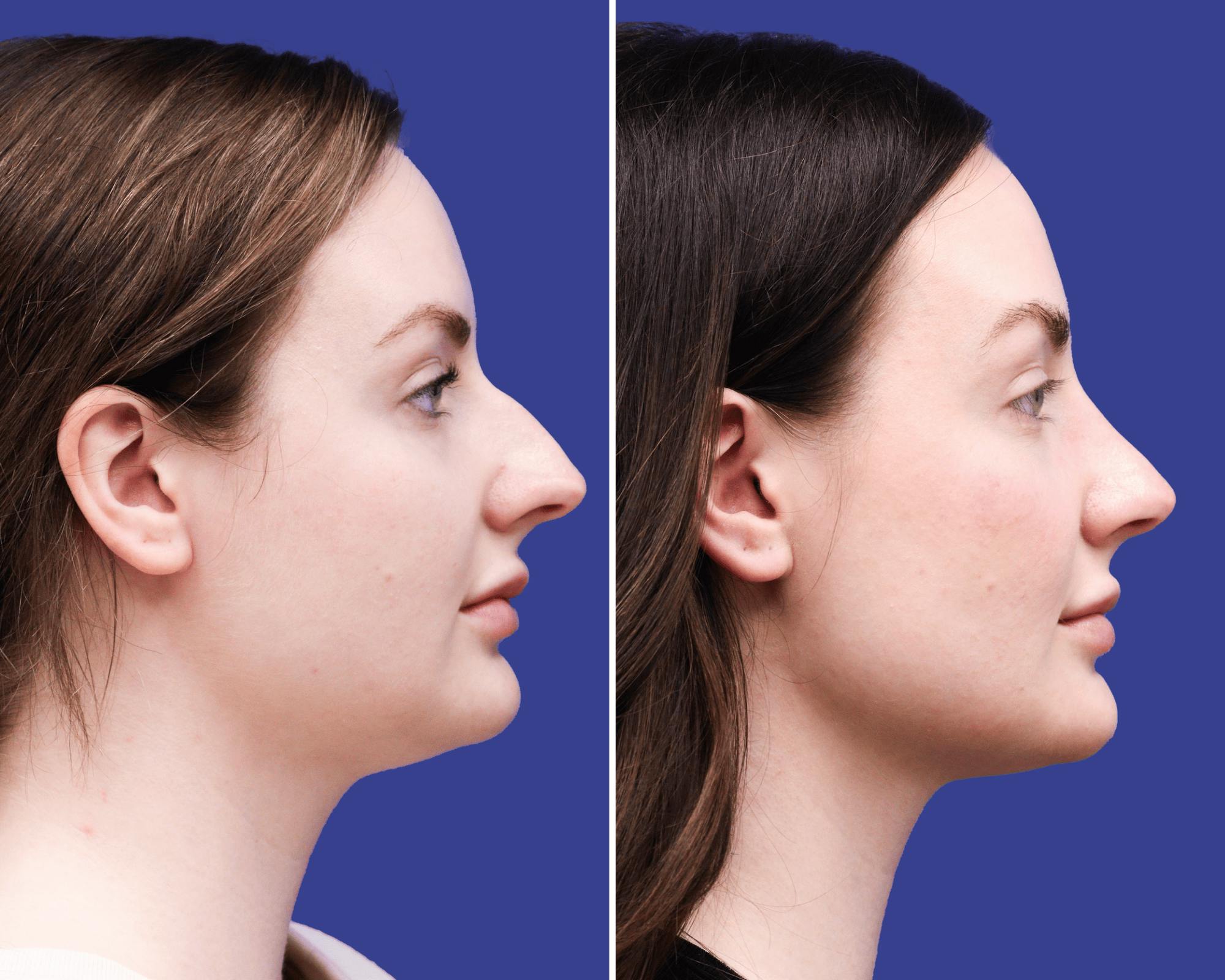
Most aesthetic problems following rhinoplasty involve the lower one-third of the nose. The ability to adequately and consistently refine the nasal tip remains the Holy Grail of the rhinoplasty surgeon. Fortunately, most post-rhinoplasty tip problems are minor, some, however, can be daunting. Most post-rhinoplasty deformities can be repaired with a fairly reliable degree of aesthetic resolution. It is impossible to assure perfection in any case. The most challenging aspect of revision surgery of the nasal tip may be the surgeon’s ability to balance the patient’s expectations with the reality of what is possible.
Post-operative aesthetic problems in the nasal tip result from an inappropriate preoperative evaluation and diagnosis, an inappropriate operative procedure, or both. Each case where the postoperative result is not adequate should represent a valuable learning experience fore the surgeon. In each of these less than desirable cases the preoperative photos should be examined, the operative plan should be reevaluated, and the operative procedure reconsidered. Where did the judgmental error occur? This question must be answered. When the surgeon is dealing with his or her own results the reevaluation provides a humbling but very important enlightening experience in the quest for consistent good results in rhinoplasty. It is much more difficult when the patient has come for secondary surgery when the patient has had the primary procedure elsewhere.
When a patient who has had a primary rhinoplasty comes to the same surgeon for a secondary procedure usually it is because the patient has faith in the primary surgeon and trusts that he or she can adequately adjust the aesthetic concerns. It is important that the surgeon acknowledge the problem that the patient is concerned with. It is the beginning point for any reasonable conversation about secondary surgery. There is a strong tendency for the surgeon’s ego to deny that any problem exists. A comment like, "I don’t see any problem" or "It looks just fine to me", instantly destroys the patient’s confidence in the surgeon. If the surgeon can’t see the problem how could he fix it. The next thought is, "maybe I should not have come here in the first place". It is always best to acknowledge the problem (unless there really is no problem) and deal with it from that point. It is much better to say, “I see what you are talking about, it is very minor, I think we should leave it alone. If the problem is significant the patient is told to wait an appropriate time and a secondary procedure will be done. If the problem is significant and it is beyond the surgeon’s ability to correct, the case should be referred.
When the patient has had surgery elsewhere a long time ago there is a different set of psychological circumstances. The patients who have had their initial rhinoplasty years ago have usually adjusted to the aesthetic problems and while they have never been happy with the results are not hostile. In many cases financial or family circumstances have had a priority in their life. The initial surgeon may no longer be available for the patient. Referring the patient back is not an option. They usually are realistic about what can be achieved with secondary surgery. With this group of patients it is unwise to change their appearance too much, especially relative to overall nasal size and retrosse. Many older patients have the small noses that routinely resulted from operations done in the 1960’s and 1970’s. They have assimilated the small size into their self –image. The secondary procedure should be designed to bring symmetry and harmony to the nose without significantly enlarging the nose. These patients will not tell you they do not want the nose larger. The unhappiness about new larger nose is expressed following the secondary procedure.
The group of patients who are seeking secondary rhinoplasty following a recent procedure (one to three or years) usually represent a different set of psychological circumstances. Invariably, the patient has made a decision not to return to the initial surgeon for a secondary procedure. It has been written many times that the cardinal rule is not to admonish the primary surgeon about the result. It is still true. It accomplishes nothing in helping the patient. It simply rekindles any hostility the patient may have. The condemnation of another surgeon’ always results in some repercussion. It is best to state truthfully that you were not present at the initial surgery and could not possibly know the details of the surgery or the exact reasons that lead to the current appearance. You should indicate that you have to examine and evaluate the nose and formulate a plan to secondary rhinoplasty.
Not all patients who come for consultation for secondary rhinoplasty are psychologically fit for surgery. The patient who immediately tells the surgeon that he or she expects perfection from procedure is not a candidate. The patient who berates the other surgeon and praises you as wonderful is not a candidate. The patient who brings in photos and diagrams may just be trying to be complete in his or her explanation. A long consultation may be necessary to explain the process and make sure the patient is realistic. If you feel you have made your case carefully, thoughtfully, and completely that should be the end any detailed explanation. When this patient, just before surgery, sends a letter or package of further diagrams and notes detailing minutia you should cancel the case. These patients are probably obsessive-compulsive and their nose is the focus of their lives. You can not make them happy. Patients who are either side of the broad spectrum of “normal” appearance in their manor of dress and personal appearance and hygiene should be suspect. And finally, any patient who by intuition makes you feel uncomfortable should trigger a warning sign that this may not be an appropriate patient.
There are certain patients who are not physically suited for surgery. The patient with exquisitely thin skin may not be suitable for any further manipulation of the tip skin and may not be a candidate for grafting. The dangers of further surgery must enter the equation. Conversely, the patient with extremely thick skin may also present a problem for revision surgery. Invariably these patients had thick skin when they presently to the original surgeon. In an attempt to modify the tip contours most or all of the lower lateral cartilages (LLC) were removed leaving the patient with an even worse looking nose. Most of these patients can be helped be nasal tip grafts, but it is the expectations of these patients that may be a problem. These patients always seem to bring photos of models with small highly refined noses as their ideal. Surgery should proceed only after the patient truly understands the limitations of revision surgery. Multiple nasal tip procedures in some patients have created a subcutaneous scar tissue density that resists expansion of grafts. Some patients complain more about the dense erythema of the nose following multiple rhinoplasties than about the configuration of the nose. While newer technologies such as laser and intense pulsed light treatments may be of help these patients should know that the erythema might worsen. Finally, any medical condition which would preclude other elective procedures would also preclude revision nasal surgery.
Most post-operative tip problems result from misjudgments about the preoperative condition of lower lateral cartilages and failure to appreciate the significance if thick skin. The most common complaints following rhinoplasty are tip asymmetries (including bossa), poor projection, polly beak, and tip ptosis. These nasal tip deformities have in common the lack of structural support of the lower lateral cartilages following surgical intervention. It is almost certain that these patients had lower lateral cartilages that were relatively non-supporting before surgery. The second most common complaints are related to alar retraction, alar convexity/concavity and hanging columella. In the case where tip asymmetries or poor projection have occurred, the surgeon either did not appreciate the relative weakness of the lower lateral cartilages or did not adapt the rhinoplasty procedure to compensate for the weakness. Where increasing in lower lateral strength was imperative, it was instead weakened. In the case of alar retraction, the surgical procedure involved an over resection of the lateral ala of the lower lateral cartilage or a failure to recognize mild alar retraction preoperatively. The ala retracted superiorly as scar tissue contracted in response to the removed lateral ala cartilage. The hanging columella usually results from over resection of the ala or a failure to identify a potential for the columella to appear redundant following surgery.
THE ELEVATED NASAL ALA – THE ALAR GRAFT
Most ala deformities following rhinoplasty are a combined elevation of the alar rim into an arch with a smaller radius the preoperative and a flattening or concavity of the normal alar arch. This deformity is caused be removal of too much of the vertical height of the lateral crus of the lower lateral cartilage. If at least 6mm of vertical height of cartilage is left at the conclusion of the rhinoplasty the appearance of the ala usually is adequate. Almost all alar arch elevation is secondary to over excision of the lower lateral alar cartilage.
The alar arch can be restored with either septal or auricular cymba concha cartilage grafting. It can be done as an independent procedure or can be part of a more extensive nasal tip reconstruction. The cartilage graft must be placed at a position that is quite near the alar margin to cause the desired effect. A cartilage graft placed in the normal anatomic position will not lower the alar margin once it has been removed and scar retraction has occurred. A pocket is created by entering the ala through the original surgical incision. The dissection is carried downward toward the alar margin. The ideal endpoint is 1 mm above the free margin of the ala. The graft need not extend laterally into the alar base when only the arch of the ala is of concern. The graft size in the 22mm x 6mm range is usually adequate. In most cases the alar skin lining is not deficient and a composite skin-cartilage graft is not necessary. It is rare for the original surgeon to have removed alar skin lining. Once the scar tissue bed between the skin and the alar lining is dissected the alar lining adequacy becomes evident. If preoperatively, the alar margin is noted to be not only elevated but also rolled inward, there may be a possibility that alar skin lining may have to be replaced. The most desirable graft in such circumstances would be a cymba concha cartilage graft lined with attached cymba conchal skin. It is important that the graft be fairly straight or slightly curved. If too much effort is use to make the graft curve so that it mimics the curve of the nasal ala it will curve even more when it is placed in the alar pocket. This can produce an undesirable flaring of the nostril. The cartilage graft will maintain its position if the pocket is the same size as the graft. The alar skin is closed with 4-0 chromic suture (Figs. 30–1A, B, and C, Figs. 30–2A and B). If a composite graft is used the alar skin is sutured to the composite graft skin with 4-0 chromic sutures.
THE COLLAPSED ALA- THE ALAR BATTEN GRAFT
The collapsed ala is a result of the same postoperative contraction that cause the elevated ala but more severe because the airway is compromised. The graft that is used to reverse the concavity is wider and longer and placed at slightly higher level. This graft is usually thicker and stronger than the alar graft. Besides elevating the concavity at the alar groove region, it must also resist the negative pressure of respiration. The graft also must extend to and just beneath the pyriform aperture for support. These grafts can be formed from either septal or auricular cartilage. They can be used as independent grafts to alleviate respiratory obstruction or a part of a nasal tip reconstruction. (Fig. 30–3A and B, Figs. 30–4A and B, Figs. 30–5A and B).
NASAL TIP BOSSA - THE DOME BINDING SUTURE
One of the most common complaints of patients seeking secondary surgery is the formation of bossa either unilateral or bilateral. The patient describes the slow progressive development of “knobs” or “bumps” in the nasal tip. These bossa are often accompanied by a central tip depression. The cause is related to excision of lateral lower lateral cartilage. The reason for bossa formation after rhinoplasty is always over excision of the LLC. The remaining lower lateral cartilage could not sustain the central position of the domes. As scar contraction occurs laterally to fill the void created by excision of the LLC the dome (or domes) is pulled laterally. This lateral dislocation of the dome causes the bossa to occur. There is usually the history of a subtle beginning and progressive worsening until a permanent lateral position is noted. The LLC following cephalic excision lost their integrity to maintain a central and forward position. The lateral positioning of the domes may be associated with a slight loss of projection. If over-projection was one facet of the preoperative aesthetic problem then this loss of projection may be welcomed. Simple excision or shave of the bossa via a marginal incision may reduce the bossa but it usually contributes to an overall roundness of the nasal tip. It is much more functional to approach and mobilize the LLC via intra-cartilaginous and marginal incisions. The LLC can be examined. It is always a learning experience to see what the previous surgeon has done and relate that surgery to the outcome. Repositioning the lateralized domes into their original midline and contiguous position is much more effective in giving the nasal tip its normal triangular shape (rather than unnatural rounded appearance). This is most easily done by using a dome-binding suture. This is a permanent mattress suture with the knot buried between the domes. Suturing the domes at the initial procedure could have prevented the occurrence of bossa. The suture gives remarkable support to the entire nasal tip, narrowing it horizontally and projecting it forward. The reason the domes lateralize following rhinoplasty is that the inherent strength of the LLC was lacking. This is an identifiable feature pre-op. Lower lateral cartilage weakness is one of the most important preoperative features to be determined before surgery (Figs. 30–6A and B, Figs. 30–7A and B). The weakest LLC are commonly associated with thick skin in an inverse proportion. When the lateral crura of the LLC were very weak pre-op often the medial crura were very weak as well. In these cases a strut must be placed at secondary surgery to support the LCC even though a dome-binding suture has been used to bring the domes forward and centrally into unity.
THE UMBRELLA GRAFT
Occasionally, the problem with the nasal tip is the patient’s perception of sharpness or a complaint that the tip is “too pointy”. This can occur following a rhinoplasty where the dome division was performed but the gap between the projecting central crura and the cut lateral crura is great. This results in a sharp pointed triangular shaped tip. In most cases, the resolution requires a delivery approach with amputation of the offending projecting dome element. To maintain the projection and create tip width an umbrella graft often is the answer. This graft is ovoid in shape and extends over the tip. It is essential that the edges be shaved sharply to prevent the edges from showing through the tip skin. (Figs 30–8A and B, Fig. 30–9A and B). The graft must be slightly curved to follow the natural curve of the nasal tip.
THE SUPRATIP ONLAY GRAFT
A unilateral concavity immediately above the supratip can result from a deviation of the septal angle of the cartilaginous septum. This deformity can occur as a tip deformity when the LLC themselves are in good position. The deformity can be corrected if the nasal septum can be straightened to plum midline. If the skin is thin and the deviated dorsal septal angle is all that remains of the nasal septum, it may impossible to correct this deformity by straightening the septum alone. Partial thickness incisions on a deviated septum concave surface can be used to move the cartilage in an opposite direction. However, when the deviated cartilage strut is the only support of the nasal supratip this technique may cause the mid nose to collapse. In such cases an exact fitting supratip graft may can fill the area and give symmetry to the supratip (Figs. 30–10A, B, and C).
THE EXTENDED COLUMELLA TIP GRAFT
On of the most common postoperative rhinoplasty deformities is a total loss of tip projection. This occurs when the initial surgeon failed to appreciate the inherent weakness of the LLC. The roundness or fullness of the nasal tip in these cases was often approached as needing significant reduction of the LLC. The expectation was that the tip skin would drape over the reduced LLC producing a more attractive nasal tip. When the LLC are small, thin, weak, soft, and easily compressible there is no chance they will retain their quality of projection when they are reduced in size. In these cases, some projection mechanism must be use to cause the tip to either lie at the level of the dorsal line or to project forward of the dorsal line. The original surgeon could have prevented the loss of projection by limiting the amount of LLC excision, and /or using a columellar strut, a dome-binding suture, a premaxillary graft, or a tip graft to maintain or improve tip projection. Once the problem has occurred however, usually one or more tip projecting techniques must be used to move the tip forward and overcome the scar forces the resulted form the initial rhinoplasty. The extended columellar tip graft was developed to both strengthen and stiffen the columella and provide shape and extension to the lobule and sublobule in a single cartilage graft placed endonasally. The graft is best fashioned from the nasal septum but can be formed from the cavum concha also.
This graft is usually placed at the conclusion of the reconstructive procedure. The need for this graft is determined at the time of the pre-operative assessment. When the domes of the LLC are retro-positioned to such a degree that neither dome binding and/or strut placement can produce enough projection, the extended columella tip graft should be considered. The graft is usually 2.5-3.0 cm in length. It is shaped like into a long isosceles triangle. The short length of the triangle, which gives form and shape to the nasal tip, is usually about 10-12 mm in length. It is important that the edges of the graft be beveled around the entire graft. This is especially true along the edge that lies beneath the domes. The bevel on the surface that is in contact with the skin will turn up slightly allowing for a soft appearance at the tip. Failure to bevel the edges will result in the graft showing through the skin.
The graft is self-retentive because of the pocket in which it is placed. At the conclusion of the rhinoplasty all mucosal and septal sutures are placed except at the margin incision on the right (if the surgeon is right handed). Using a curved Stevens scissors a pocket is made by blunt dissection, via the marginal incision, beneath the skin of the lobule. The pocket is carefully extended over the feet of the LLC down to the columella-lip junction. It is important that the marginal incision not be extended down onto the columella. It is the long narrow pocket in the pre-crural space that will give the graft stability and maintain its central position. Prior to making the pocket the distance from the columella-lip junction to the leading edge of the domes is made. Addition millimeters are added for desired extent of the projection. The graft is then prepared once the measurement is determined from the new proposed tip position to the columella-lip junction. The amount of available cartilage will determine how long the pocket will be. The graft must extend at least halfway down into the columella to achieve stability. To place the graft it is grasped with a Brown-Adson forceps and pushed through the marginal incision onto the lower nasal dorsum. It is then pushed carefully inferiorly into the pre-crural pocket. At times, adjustments must be made to either widen the pre-crural columellar pocket or narrow the long dimension of the graft for a proper fit. The surgeon must be mindful that the narrower the graft is the less projection power it will exert. Also the narrower the graft the more risk there is that the graft can fracture. Once the graft is in position the amount of projection is easily seen. It is better that the tip seem overly projected at this point. There is always some settling of the projection post-operatively. Usually a single chromic suture is needed at the region of the nasal isthmus and another at the area of the junction of the columella and the nares to stabilize and centralize the graft. When the graft is in position the skin of the nasal tip is gently massage of edema so the position and projection potential of the graft can be appreciated. It is not a problem to be able to see the outline of the graft at this point. Once the vasoconstriction from the local anesthesia abates the outline of the graft will no longer be seen. During bandaging of the nose it may be necessary to place a small Telfa™ bolster just above the anterior margin of the tip graft to help stabilize the graft during initial healing (Figs. 30–11A and B, Figs. 30–12A and B, Figs. 30–13A and B).
THE SHIELD GRAFT
Occasionally, the need for a projection tip graft is needed but the cartilage specimens that are available (septal and/or auricular) are not long enough to produce an extended tip columellar graft that is self stabilized in the pre-crural space. A shorter triangle of cartilage can be stabilized in the tip by using a suture anchor between the base of the graft and the base of the columella. Any remaining dome remnants are sutured with a dome-binding suture as described above. This is important even there is only a small remnant remaining. The sutured domes give a posterior support to the shield graft. Once the rhinoplasty is complete all mucosal incisions are sutured with the exception of the right marginal incision. The right marginal incision is used to place the graft as the last maneuver of the procedure. The graft is as wide as possible at the nasal tip and as long as possible where it will fit into the pre-crural pocket. A pocket is made via the right marginal incision into the pre-crural space. The size should just fit the graft. If the graft is placed without an anchor it is likely to ride up toward the tip. To anchor the graft a double-armed straight needle 4-0 prolene is used. One needle is placed through the base of the graft. It is pulled through until the needles are held together as a unit. The needles are placed together as a unit into the precrural pocket and then pushed down along the center of the columella to exit at the columella base. The needles are the pulled to allow the graft to move toward and into the pretrial pocket. Once the graft is in good position, slight tension is placed on the suture so that is securely in place. Care is taken not to put to much tension on the graft or the suture may pull through the cartilage. A small square of Telfa™ (4mm x 4mm) is cut as a bolster. The needles are pushed through the Telfa™ are a knot is tied to fit snuggly. This anchor will hold the graft is position. The suture can remain until the splint is removed. The remaining right marginal incision is the closed with 4-0 chromic suture (Figs. 30–14A, B and C, Figs. 30–15A and B, Figs. 30–16A and B).
POSTOPERATIVE MANAGEMENT
The postoperative management following one or more of these grafts is similar to the management of any primary or secondary rhinoplasty case. Antibiotics are used universally. The author prefers to use a small Telfa™ wick in each nares until the morning following surgery. The patient is instructed to remove the wick with a tweezers. A cortisone-antibiotic ointment is used sparingly for several days also in each nares. A paper tape and Aquaplast™ splint applied following the procedure is removed on the 6th postoperative day.
COMPLICATIONS
Complications are also no different then any found in the postoperative course following primary and secondary rhinoplasty. Bleeding is always a significant problem following rhinoplasty if packing is required. It always best is the surgeon who has done the reconstruction see the patient concerning the bleeding rather than another surgeon who does not have a vested interest in the case. Some one who is interested only in stopping the bleeding may not be as gentle with a recently operated nose. Infection should always be preventable. Liberal use of Betadine™ is advised for surgical prep, both on the exposed skin surface and in the nares. It is imperative that no permanent suture comes into contact with the teeth. Operative and postoperative antibiotics are advisable in secondary rhinoplasty when grafts are used.
The advantage of the endonasal approach with the grafts described above is that contour on the external nose can immediately be appreciated. The most significant problem with any of these grafts is the visual aesthetics of misplaced grafts, grafts that are too big or too small, and the perceptible edge of grafts that have not been shaved razor thin. All of these problems can be prevented with a focused attention to the detail of graft planning and implantation.
SUMMARY
These various grafts and sutures have been used successfully in many hundreds of endonasal revision rhinoplasties involving repair of the nasal tip. Success in revision rhinoplasty requires careful analysis and close attention to the details of camouflage and projection of the nasal tip. The endonasal approach requires the surgeon to evaluate the deficiencies in the nasal tip prior to surgery. The surgeon must be able to explore the possible need for one or multiple of the grafts described above and visualize their placement and the effect they will have on restoring the nasal tip to normal. Skin thickness, amount of remaining cartilage, support characteristics of the remaining cartilage, position of remaining cartilage, type and amount of scaring, the condition of the nasal septum, the presence or absence of the cartilaginous nasal septum, availability of auricular cartilage all must be firmly appreciated and be a part of surgical plan restore the nasal tip to normal.
Further Reading
Gunter JP, Rohrich RJ. Correction of the pinched nasal tip with alar spreader grafts. Plast Resonstr Surg. 1992 Nov;90(5):821-9.
Johnson CM, Toriumi DM. Open Structure Rhinoplasty. W.B. Saunders 1998.
Kim DW, Toriumi DM. Nasal analysis for secondary rhinoplasty. Facial Plast Surg Clin North Am. 2003 Aug;11(3):399-419.
Peck GC Jr, Michelson L, Segal J, Peck GC Dr. An 18-year experience with the umbrella graft in rhinoplasty. Plast Reconstr Surg. 1998 Nov;102(6):2158-65.
Rohrich RJ, Raniere J Jr, Ha RY. The alar contour graft: correction and prevention of alar rim deformities in rhinoplasty. Plast Reconstr Surg. 2002 Jun;109(7):2495-505.
Sheen JH. Tip graft: a 20-year retrospective. Plast Reconstr Surg. 1993 Jan;91(1):48-63.
Tardy ME Jr. Rhinoplasty: the Art & the Science. W.B. Saunders 1997.
Toriumi DM, Josen J, Weinberger M, Tardy ME Jr. Use of alar batten grafts for correction of nasal valve collapse. Arch Otolaryngol Head Neck Surg. 1997 Aug;123(8):802-8.
Figure Legends
Figure 30–1. A. Postoperative rhinoplasty patient with marked elevation of the right alar margin secondary to over excision of the lower lateral cartilage. B. Surgical photo indicating the shape and size of the alar batten graft to support the right ala. The graft must be thick enough to be effective, but thin enough so as not cause distortion of the ala. The graft must be place in a pocket to within 1 mm of the alar margin to effectively lower the rim position. C. Immediate postoperative showing the effect of the alar batten graft placement.
Figure 30–2. A. Preoperative frontal view of elevated right alar margin secondary to over excision of the LLC. B. Postoperative frontal view following alar batten grafting.
Figure 30–3. A. Preoperative surgical view of alar retraction and elevation following over excision of the LLC and ULC on the right. The ala is both collapsed and retracted. B. Operative view showing the size and shape of a septal cartilage graft designed to elevate the collapsed lateral ala and fill the depression caused by excision of the ULC. The graft must extend to with 1mm of alar margin to achieve a downward repositioning of the alar margin.
Figure 30–4. A and B: Preoperative and postoperative lateral view of patient with elevated and collapsed right ala.
Figure 30–5. A and B: Preoperative and postoperative submental views of patient with elevated and collapsed right ala.
Figure 30–6. A. Preoperative surgeons view of patient with separated domes. The bifidity with central clefting occurs in patients with weak LLC who have had an intracartilaginous approach to the primary rhinoplasty. As the domes drift laterally they produce the appearance seen in this patient.
B. The immediate postoperative view of the patient in Fig. 7 A following delivery of the LLC remnants and application of the dome binding suture. The bifidity and cefting are eliminated.
Figure 30–7. A and B: Preoperative and postoperative views of the patient with post-rhinoplasty dome separation corrected by the dome-binding suture.
Figure 30–8. A and B: Frontal view and oblique of patient who had a dome splitting type rhinoplasty years performed earlier.
This has resulted in a major tip over projection. The excision of the lateral ala of the LLC has produced marked elevation of the alar margins. The oval shaped opacity indicates the position of the umbrella graft used to smooth the tip following amputation of the over projecting medial crura of the LLC. The straight line on the oblique view indicates the level of excision of the projecting medial crura. The opacity over the ala indicates the position of the alar batten graft.
Figure 30–9. A and B: Preoperative and postoperative frontal views of patient following umbrella grafting of the nasal tip.
Figure 30–10. A and B: Preoperative and postoperative frontal views of a patient with an acute deviation of the nasal septum at the nasal septal angle. Straightening of the septum and use of a supratip onlay graft produces the normal appearance seen in the post-op view. C: The surgical diagram indicates the area of supratip onlay grafting. The patient also required onlay grafting and alar batten grafting on the right.
Figure 30–11. A. Surgical preoperative view of a patient for nasal tip reconstruction. Most of the lateral ala has been removed leaving only the domes. The feet of the lower lateral cartilages are relatively short and the tip is ptotic. B: Intraoperative view showing the size and shape of the extended columella tip graft that will be placed to give additional projection to the nasal tip. The graft is placed via an open marginal incision on the right side. All other incisions are closed prior to the placement of the graft. A pocket is dissected in the pre-crural space down toward the pre-maxilla. The graft is pushed through the marginal incision onto the nasal dorsum while holding it with a Brown-Adson forceps. The graft is then slowly pulled down into the dissected precrural space. The right marginal incision is then closed with multiple chromic sutures.
Figure 30–12. A and B: Intraoperative views of the patient just prior to the procedure and following columellar strut, dome binding suture, and extended columella tip graft.
Figure 30–13. A and B: Preoperative and one year postoperative lateral views following nasal tip reconstruction.
Figure 30–14. A. Preoperative intraoperative view of patient for nasal tip reconstruction. The patient has lost support of the nasal tip secondary to excision of most of the LLC. The LLC remnants are weak and non-supportive producing a polly beak deformity. B. Intraoperative view of the size and shape of the auricular cartilage graft to placed to augment the nasal tip. Septal cartilage was not available because of previous septoplasty. C. Once the tip graft is in position the needles are pushed through a small bolster of Telfa™ and tied. This suture remains in position for four days.
Figure 30–15. A and B: Immediate preoperative and postoperative lateral view of the patient following placement of the short tip graft,
Figure 30–16. A and B: Preoperative and one year postoperative frontal views following a short tip graft placement to restore projection and form to the nasal tip following primary rhinoplasty.
|