
As a double board-certified facial plastic surgeon and Harvard Medical School educator, Dr. Frank Fechner, MD, approaches jawline contouring with a focus on anatomical precision and long-term balance. At Fechner MD, every recommendation is based on how the face is aging beneath the surface, not just what is visible on the surface.
For some patients, early volume loss creates a softened jawline that responds well to non-surgical treatment. For others, loosened skin and separation of the platysma muscle create jowls and neck banding that require surgical correction. The right approach depends on which of these changes is present. Understanding that distinction is what leads to consistently natural results. Here’s what to consider.
Non-Surgical Jawline Contouring: Controlled Refinement for Early Changes
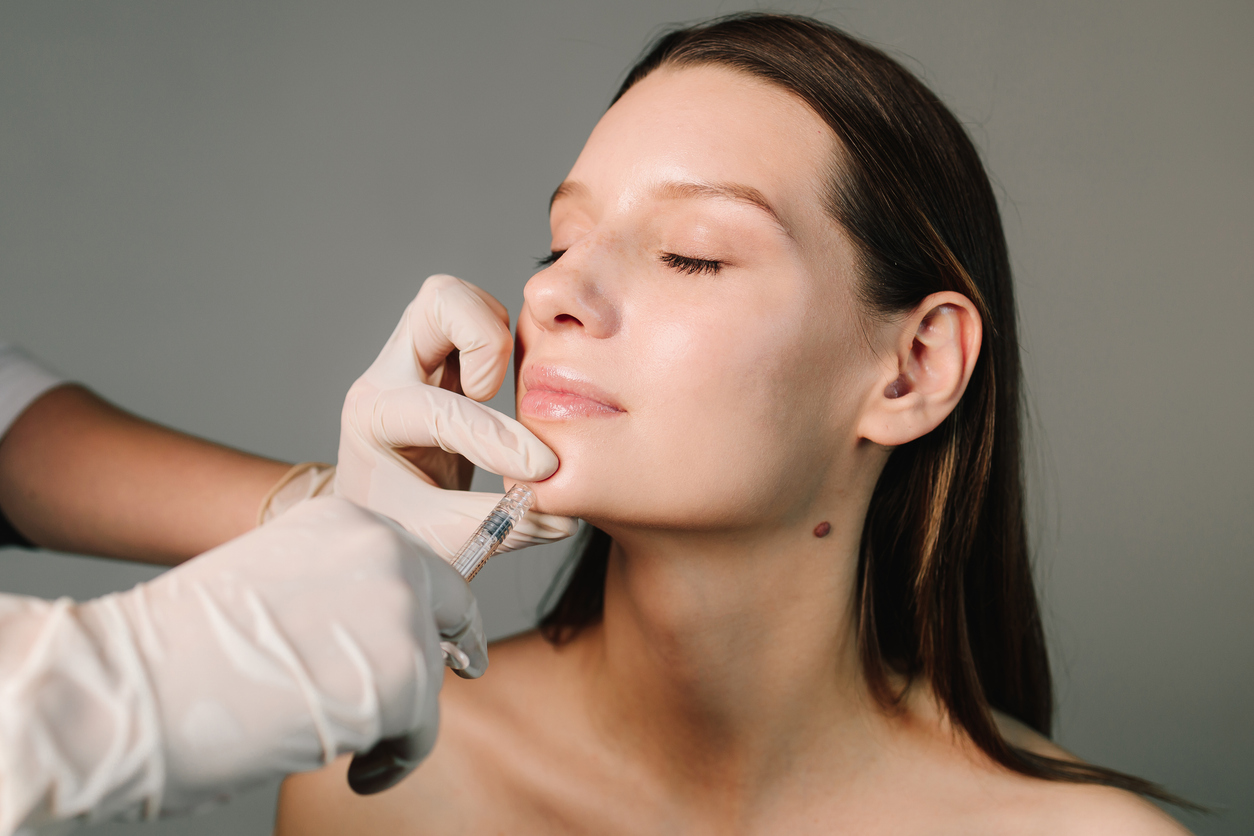
Non-surgical jawline contouring uses dermal fillers to reinforce areas where structural support has diminished. The goal is not to add volume broadly, but to place small amounts with precision so the jawline appears more defined without looking altered.
- Ideal candidates: Patients with early volume loss, slight blurring along the jawline, or minimal skin laxity.
- Treatment approach: Targeted filler placement along the jawline and chin to re-establish support and improve contour definition.
- Recovery and results: Minimal downtime with immediate visible change. Most fillers used in this area last 6 to 18 months, depending on the product selected and metabolism.
This approach works best when the skin still has enough elasticity to adapt to the added support.
Surgical Jawline Contouring: Correcting Skin and Muscle Changes
When the jawline is affected by excess skin or platysma muscle separation, adding volume alone does not address the underlying issue. In these cases, a neck lift provides the level of correction needed to restore definition.
- Ideal candidates: Patients with jowls, visible skin laxity, or vertical neck banding caused by platysma separation.
- Treatment approach: A neck lift repositions and tightens the platysma muscle while removing excess skin, creating a smoother transition from the jawline to the neck.
- Longevity of results: Results typically last 10 to 12 years, with gradual aging continuing over time.
The focus is on restoring structure in a way that aligns with the patient’s natural anatomy rather than creating an over-tightened appearance.
How to Choose the Right Approach
The most effective treatment depends on whether the jawline has lost volume or structural support. Fillers can improve contour when the framework remains intact. Once skin laxity or muscle changes are involved, surgical correction becomes necessary to achieve meaningful improvement.
Some patients begin with non-surgical treatment and transition to surgery later as aging progresses. Others benefit from surgery first, followed by maintenance with fillers over time. A detailed consultation allows for a plan that reflects both your current anatomy and how it is expected to change.
Choosing the Right Expertise for Jawline Contouring
Selecting between surgical and non-surgical jawline contouring requires a clear understanding of facial anatomy and aging patterns. Dr. Fechner brings extensive surgical training and experience in both aesthetic and reconstructive facial procedures.
At Fechner MD, treatment plans are built around what will deliver the most natural and durable outcome for each patient. Schedule a consultation to determine the most appropriate approach for achieving a defined, balanced jawline.