Scar Management
Even a well-healed surgical scar can respond to targeted treatment. When addressed during the active remodeling phase, scars are more receptive to clinical intervention and less likely to become raised, thickened, or discolored over time. At Fechner MD, scar management consultations are available at the six-week post-operative mark for appropriate patients.
Vivace RF Microneedling
Vivace combines fine-needle microneedling with simultaneous radiofrequency energy to stimulate collagen and elastin production in and around the scar. It is well-suited for flat, indented, or depigmented scars and can improve both texture and tone over a series of sessions.
Exosome Therapy
Exosomes are extracellular vesicles that carry growth factors and signaling molecules capable of supporting the healing environment at the cellular level. Applied topically in a clinical setting, exosome therapy can reduce localized inflammation and accelerate scar remodeling. It is frequently used alongside other treatments to enhance outcomes.
Plated Calm
Plated Calm is a regenerative skincare product formulated with PRGRN technology to soothe reactive and healing skin, reduce redness, and reinforce the skin barrier. It is used as a calming adjunct to more active scar treatments, helping to stabilize the skin between sessions.
Vascular Laser / YAG Laser
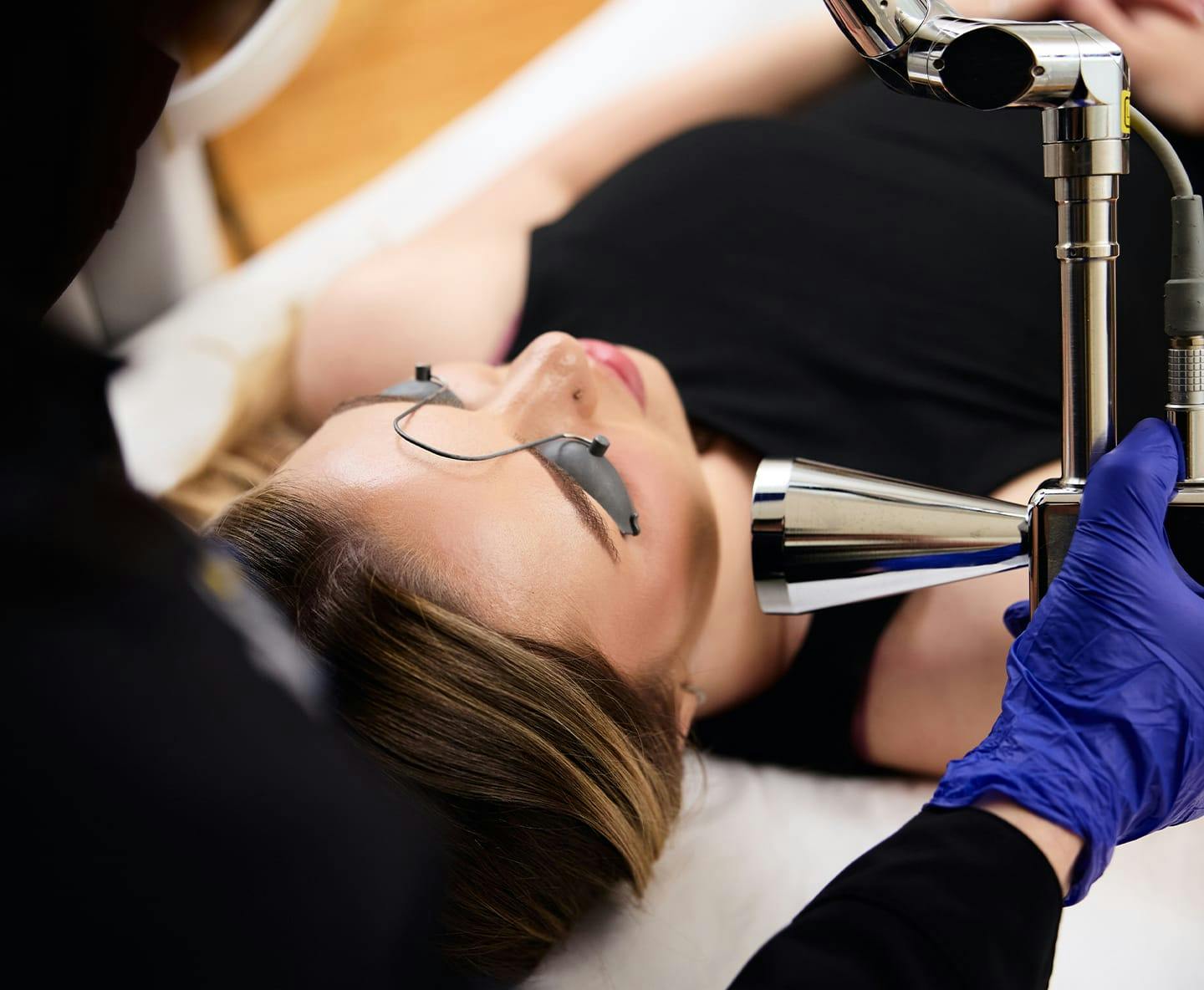
For raised or red scars with visible vascularity, a vascular or Nd:YAG laser can selectively address the blood vessels contributing to scar discoloration and elevation. Reducing the vascular supply to the scar can flatten raised tissue and diminish the pink or purple tone that makes post-surgical scars visible at rest.
IPL Photofacial
IPL targets pigmentation and superficial redness in healing skin, gradually breaking down discoloration and improving tone around the scar. It is best introduced once the scar has fully closed and initial inflammation has resolved.
Microneedling
Microneedling triggers the skin's natural healing response to generate new collagen and elastin. For flat, white, or atrophic scars where tissue volume has been lost, it can help rebuild the dermal matrix and improve scar appearance over time. Combining it with exosomes or topical serums can further enhance results.
Laser Resurfacing
For scars with significant surface irregularity or depth, laser resurfacing is a more intensive option. Ablative and fractional technologies can smooth the skin's surface, stimulate deeper collagen remodeling, and improve the color and texture of mature scars across a range of skin types.